

Hey there! As a supplier of brass bearings, I often get asked the question: “Are brass bearings self - lubricating?” Well, let's dive right into this topic and find out.
First off, let's understand what self - lubricating means. A self - lubricating bearing is one that can reduce friction and wear without the need for external lubricants like oil or grease all the time. It has some built - in mechanisms to keep things running smoothly.
Brass is an alloy made primarily of copper and zinc. In general, brass bearings have decent lubricating properties on their own, but whether they're truly self - lubricating depends on a few factors.
The Natural Lubricating Properties of Brass
Brass has a relatively low coefficient of friction compared to some other metals. When two brass surfaces come into contact and start moving against each other, the material itself can provide a certain level of lubrication. The zinc in brass forms a thin oxide layer on the surface, which can act as a lubricant to some extent. This oxide layer helps to reduce the direct metal - to - metal contact and thus minimizes wear and tear.
For instance, in some low - load and low - speed applications, brass bearings can operate for a while without additional lubrication. Think of small household appliances or some light - duty machinery where the forces and speeds are not too high. The natural lubricating ability of brass can keep the parts moving smoothly for a reasonable period.
Limitations of Brass as a Self - Lubricating Material
However, brass bearings do have their limitations when it comes to self - lubrication. In high - load and high - speed applications, the natural lubricating properties of brass are quickly overwhelmed. The heat generated by the friction can break down the thin oxide layer, and without proper lubrication, the wear rate increases significantly.
Also, in environments where there is a lot of dust, dirt, or moisture, the performance of brass bearings without external lubrication can degrade rapidly. Dust particles can get trapped between the bearing surfaces and act like abrasives, accelerating wear. Moisture can cause corrosion, which not only weakens the bearing but also disrupts the lubricating oxide layer.
Self - Lubricating Brass Bearing Solutions
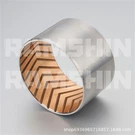
To overcome these limitations, we've developed some innovative self - lubricating brass bearing products. Take our KSOB650 - W Copper Alloy Water - lubricating Bearing. This bearing is specifically designed to work well in wet environments. It uses water as a lubricant, which is not only environmentally friendly but also cost - effective. The special copper alloy composition in this bearing enhances its resistance to corrosion and wear even when constantly in contact with water.
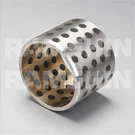
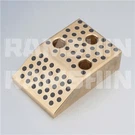
Another great product is our KSOB650 - B Copper Steel - casting Solid - lubricant Embedded Bearing. In this bearing, solid lubricants are embedded in the brass matrix. As the bearing operates, the solid lubricants are gradually released, providing continuous lubrication. This makes it suitable for high - load and high - speed applications where traditional brass bearings would struggle.
Common Applications of Self - Lubricating Brass Bearings
Self - lubricating brass bearings have a wide range of applications. In the automotive industry, they can be used in various components such as throttle linkages, seat adjusters, and some parts of the engine where lubrication can be a challenge. The self - lubricating feature reduces the need for frequent maintenance and helps to improve the overall reliability of the vehicle.
In the aerospace industry, where weight and reliability are crucial, self - lubricating brass bearings are used in control systems and some moving parts. Their ability to operate without additional lubrication reduces the weight of the aircraft and the risk of lubricant leakage, which can be a major safety concern.
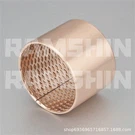
Our Bronze Sleeve Bearings are also very popular in industrial machinery. They are used in conveyor systems, pumps, and other equipment where smooth and reliable operation is essential.
How to Choose the Right Self - Lubricating Brass Bearing
When choosing a self - lubricating brass bearing, you need to consider several factors. First, think about the load and speed of your application. High - load and high - speed applications require bearings with better self - lubricating capabilities, like the KSOB650 - B.


The environment is also crucial. If your application is in a wet or dirty environment, you might want to go for a bearing like the KSOB650 - W that can resist corrosion and the effects of contaminants.
The size and shape of the bearing are important too. Make sure the bearing you choose fits properly in your equipment. You don't want a bearing that's too big or too small, as it can affect the performance and lifespan of the bearing.
Conclusion
So, are brass bearings self - lubricating? Well, it's a bit of a yes and no answer. While brass has some natural lubricating properties, in most real - world applications, especially those with high loads, high speeds, or harsh environments, additional measures are needed to make them truly self - lubricating.
At our company, we've put a lot of effort into developing high - quality self - lubricating brass bearings to meet the diverse needs of our customers. Whether you're in the automotive, aerospace, or industrial sector, we have the right bearing for you.
If you're interested in our self - lubricating brass bearings and want to learn more or place an order, don't hesitate to reach out. We're here to help you find the perfect solution for your application. Let's have a chat and see how we can work together to make your machinery run more smoothly and efficiently.
References
- “Handbook of Bearings and Seals” by John A. Schey
- “Mechanical Design Handbook” by Myer Kutz