

Can a Cam Unit Plate be used in a corrosive environment?
Hey there! I'm a supplier of Cam Unit Plates, and I often get asked this question: Can a Cam Unit Plate be used in a corrosive environment? Well, let's dive right into it and find out.
First off, let's understand what a Cam Unit Plate is. A Cam Unit Plate is an essential component in many industrial applications, especially in the field of mold - making and machinery. It helps in guiding and controlling the movement of various parts within a system. It's designed to be strong and durable, but when it comes to corrosive environments, things get a bit tricky.
Corrosive environments are those where the presence of chemicals, moisture, or other reactive substances can cause damage to materials over time. For example, industries like chemical manufacturing, marine, and wastewater treatment are known for having highly corrosive conditions.
The main concern when using a Cam Unit Plate in a corrosive environment is the material it's made of. Most Cam Unit Plates are made from metals, and metals are prone to corrosion. When metal reacts with the corrosive agents in the environment, it forms rust or other corrosion products. This not only weakens the structure of the plate but can also affect its performance.
Let's take a look at some common materials used for Cam Unit Plates and how they fare in corrosive environments.
One of the popular materials is steel. Steel is strong and has good mechanical properties, but it's highly susceptible to rusting. In a corrosive environment with high humidity or the presence of acids and alkalis, steel Cam Unit Plates can start to corrode quite quickly. Rust can cause the surface of the plate to become rough, which may lead to increased friction and wear. This can ultimately result in the failure of the cam unit and affect the overall operation of the machinery.
However, there are solutions to make steel more resistant to corrosion. For instance, Harden Steel Plate is a type of steel that has undergone a hardening process. This process can improve its strength and also provide some level of corrosion resistance. But even hardened steel has its limits in extremely corrosive environments. Special coatings can be applied to steel Cam Unit Plates to protect them from corrosion. These coatings act as a barrier between the metal and the corrosive agents.
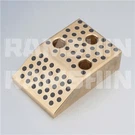
Another option is to use non - metallic materials or materials with better corrosion resistance. For example, Brass Wear Plate is a good alternative in some cases. Brass has a relatively high resistance to corrosion, especially in mild to moderately corrosive environments. It also has good wear properties, which makes it suitable for use in cam units. However, brass may not be as strong as steel in some high - load applications.


So, can a Cam Unit Plate be used in a corrosive environment? The answer is yes, but with some considerations. If the corrosive environment is mild, and proper precautions are taken, a well - protected steel Cam Unit Plate can work just fine. For more severe corrosive conditions, using a material like brass or applying advanced corrosion - resistant coatings might be necessary.
When choosing a Cam Unit Plate for a corrosive environment, it's important to consider the specific nature of the corrosive agents. Different chemicals react differently with materials. For example, if the environment has a high concentration of saltwater, like in a marine application, the corrosion mechanism is different from that in a chemical plant where acids are present.
It's also crucial to think about the operating conditions. Factors such as temperature, pressure, and the frequency of contact with the corrosive agents can all affect the corrosion rate. High temperatures can accelerate the corrosion process, while high pressures may cause the protective coatings to crack or peel off.
In addition to material selection and protection, regular maintenance is key. Inspecting the Cam Unit Plates regularly for signs of corrosion and taking appropriate action, such as cleaning, reapplying coatings, or replacing damaged parts, can extend their lifespan in a corrosive environment.
As a supplier, I've seen many cases where customers have successfully used Cam Unit Plates in corrosive environments by following these guidelines. But it's always a good idea to consult with experts or the supplier to ensure that you're making the right choice for your specific application.
If you're in the market for Cam Unit Plates and need to use them in a corrosive environment, don't hesitate to reach out. We can help you select the right material, provide advice on protection and maintenance, and ensure that you get a product that meets your requirements. Whether it's a hardened steel plate or a brass wear plate, we've got you covered.
In conclusion, while using a Cam Unit Plate in a corrosive environment presents challenges, it's definitely possible with the right approach. By understanding the nature of the corrosive environment, choosing the appropriate material, and implementing proper protection and maintenance strategies, you can ensure the reliable performance of your cam units.
If you're interested in discussing your specific needs or want to learn more about our products, contact us for a detailed discussion. We're here to make sure you get the best solution for your application.
References
- ASM Handbook: Volume 13A - Corrosion: Fundamentals, Testing, and Protection
- Corrosion Engineering by Pierre R. Roberge