

Hey there! As a polymer bushing supplier, I often get asked whether polymer bushings can be used in construction machinery. Well, let's dive right into it and find out!
What Are Polymer Bushings?
First off, let's quickly go over what polymer bushings are. Polymer bushings are a type of self - lubricating bearing. They're made from high - performance polymers, which are basically long - chain molecules. These polymers can be engineered to have all sorts of cool properties, like low friction, high wear resistance, and good chemical resistance.
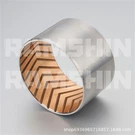
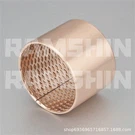
You might be wondering how they stack up against other types of bushings. For example, there's the Bimetal Bushing Bearing. Bimetal bushings typically consist of two different metals bonded together, offering good load - carrying capacity but may require more maintenance in terms of lubrication. On the other hand, Composite Bushing or polymer bushings, don't need as much lubrication because they can provide their own lubrication to some extent.


Advantages of Using Polymer Bushings in Construction Machinery
1. Self - lubrication
One of the biggest perks of polymer bushings in construction machinery is their self - lubricating property. Construction sites are often harsh environments where it can be difficult to keep up with regular lubrication schedules. Polymer bushings can operate smoothly for long periods without the need for frequent oiling or greasing. This not only saves time but also reduces maintenance costs. For instance, in a large excavator, if you use polymer bushings in the boom joints, you won't have to stop the machine as often to lubricate those parts, which means more uptime and more work getting done.
2. Corrosion resistance
Construction machinery is exposed to all kinds of elements, including water, dirt, and chemicals. Polymer bushings are highly resistant to corrosion. Unlike metal bushings that can rust and deteriorate over time, polymer bushings can withstand these harsh conditions. Let's say you're using a concrete mixer. The wet and acidic environment of the concrete can quickly corrode metal bushings, but polymer bushings will hold up much better, ensuring the longevity of the machinery.
3. Noise and vibration reduction
Construction sites are noisy places, and machinery vibrations can cause discomfort to operators and also lead to premature wear of components. Polymer bushings have excellent damping properties. They can absorb vibrations and reduce noise levels. In a bulldozer, for example, using polymer bushings in the track links can make the operation quieter and more comfortable for the operator. It also helps to protect other parts of the machine from the damaging effects of excessive vibrations.
4. Lightweight
Polymer bushings are much lighter than their metal counterparts. In construction machinery, where weight is often a concern, using lightweight components can improve fuel efficiency and overall performance. For a crane, reducing the weight of the bushings in the lifting mechanism can make it more maneuverable and use less energy to operate.
Challenges and Limitations
1. Load - carrying capacity
While polymer bushings have come a long way, they may not be suitable for extremely high - load applications. Construction machinery often has to deal with heavy loads, especially in large - scale projects. In situations where the load is too high, polymer bushings may deform or wear out more quickly. For example, in a large - tonnage hydraulic press, metal bushings might be a better choice due to their higher load - carrying capacity.
2. Temperature limitations
Polymer bushings have temperature limits. In very high - temperature environments, such as those near engines or in hot climates, the polymers can soften or lose their mechanical properties. If a construction machine is operating in a desert during the summer, the high ambient temperature could potentially affect the performance of polymer bushings. However, there are high - temperature - resistant polymers available, but they may come at a higher cost.
Real - World Applications
Despite the challenges, polymer bushings are already being used in many construction machinery applications.
1. Excavators
In excavators, polymer bushings are used in various joints, such as the boom and arm joints. Their self - lubricating property reduces the need for frequent maintenance, and their corrosion resistance ensures that they can withstand the wet and dirty conditions on construction sites.
2. Forklifts
Forklifts need to operate smoothly and quietly. Polymer bushings in the mast and steering mechanisms help to reduce noise and vibrations, providing a more comfortable working environment for the operator. Their lightweight nature also contributes to better fuel efficiency.
3. Concrete pumps
Concrete pumps are exposed to abrasive concrete and water. Polymer bushings in the pumping mechanism can resist corrosion and wear, ensuring reliable operation over a long period.
Conclusion
So, can polymer bushings be used in construction machinery? The answer is a resounding yes! They offer many advantages such as self - lubrication, corrosion resistance, noise reduction, and lightweight design. However, it's important to consider their limitations, especially in high - load and high - temperature applications.
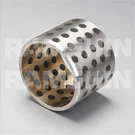
If you're in the construction machinery industry and are looking for a reliable and cost - effective bushing solution, polymer bushings are definitely worth considering. Whether you need Composite Bushing for a small forklift or Boundary Lubricated Bearing for a large excavator, we've got you covered.
If you're interested in learning more about our polymer bushings or want to discuss a specific application, feel free to reach out. We're always happy to help you find the best bushing solution for your construction machinery needs. Let's work together to make your construction projects more efficient and cost - effective!
References
- "Handbook of Bearings and Seals" - A comprehensive guide on different types of bearings, including polymer bushings.
- Industry reports on construction machinery component trends.