

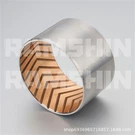
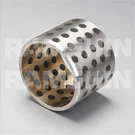
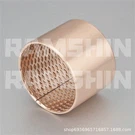
Oilless wear plates, as a key component in various industrial applications, play a crucial role in ensuring the smooth operation and longevity of machinery. As a supplier of oilless wear plates, I have witnessed firsthand how these plates interact with other components in different systems. In this blog, I will delve into the details of how oilless wear plates interact with other components and their significance in industrial settings.
Interaction with Sliding Surfaces
One of the primary functions of oilless wear plates is to provide a low - friction surface for sliding components. When used in conjunction with sliding surfaces such as guide rails or slides, oilless wear plates reduce the coefficient of friction. This reduction in friction is essential as it minimizes wear and tear on both the wear plate and the sliding surface.
For example, in a linear motion system, the oilless wear plate is typically mounted on the stationary part, while the sliding component moves over it. The self - lubricating properties of the oilless wear plate, often achieved through the incorporation of solid lubricants like graphite, ensure that there is a continuous lubricating film between the two surfaces. This film prevents direct metal - to - metal contact, which can lead to high friction, heat generation, and premature wear.


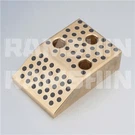
The Self - lubricating Slide Plate is a prime example of an oilless wear plate designed for such applications. Its unique structure allows it to maintain a stable lubricating performance even under high loads and speeds. The interaction between the self - lubricating slide plate and the sliding component results in smooth and precise linear motion, which is crucial in applications such as machine tools, automation equipment, and robotics.
Interaction with Guide Bushings
Oilless wear plates also interact closely with guide bushings. Guide bushings are used to guide and support moving parts, and oilless wear plates can enhance their performance. When a guide bushing is used in combination with an oilless wear plate, the wear plate provides a protective and lubricating layer.
In a mold guiding system, for instance, the oilless wear plate can be installed around the guide bushing. This helps to reduce the friction between the guide bushing and the surrounding components. The Clamps for Guide Bushing are often used to secure the guide bushing and the oilless wear plate in place. The interaction between the oilless wear plate and the guide bushing ensures that the guiding function is accurate and reliable. The wear plate absorbs the shock and vibration generated during the movement of the guide bushing, protecting the bushing from damage and extending its service life.
Interaction with Bearings
Bearings are another important component that oilless wear plates interact with. In some applications, oilless wear plates can be used as a substitute for traditional bearings or in combination with them. When used in combination, the oilless wear plate can help to distribute the load more evenly across the bearing surface.
For example, in a rotating shaft system, an oilless wear plate can be placed between the shaft and the bearing housing. This helps to reduce the radial load on the bearing, especially in applications where there are high - impact or fluctuating loads. The self - lubricating properties of the oilless wear plate also reduce the need for external lubrication, which can simplify the maintenance of the bearing system.
The Graphite Self - Lubricating Slide Plate is particularly suitable for such applications. The graphite in the plate provides excellent lubrication and heat dissipation properties. When interacting with bearings, it can prevent the formation of hot spots on the bearing surface, which can lead to bearing failure.
Interaction in High - Temperature Environments
In high - temperature environments, the interaction between oilless wear plates and other components becomes even more critical. Traditional lubricants can break down at high temperatures, leading to increased friction and wear. Oilless wear plates, on the other hand, are designed to withstand high temperatures.
For example, in a metal - forming process where the temperature can reach several hundred degrees Celsius, oilless wear plates can maintain their lubricating properties. They interact with the tooling components, such as punches and dies, to ensure smooth operation. The oilless wear plate forms a heat - resistant lubricating layer that protects the tooling from thermal damage and reduces the friction between the tool and the workpiece.
Interaction in Corrosive Environments
In corrosive environments, oilless wear plates also play an important role in protecting other components. They are often made from materials that are resistant to corrosion, such as stainless steel or special polymers. When used in a chemical processing plant or a marine environment, the oilless wear plate can prevent corrosion of the surrounding components.
The oilless wear plate acts as a barrier between the corrosive medium and the other components. For example, in a pump system in a chemical plant, the oilless wear plate can be installed on the pump housing to protect it from the corrosive chemicals being pumped. The interaction between the oilless wear plate and the pump components ensures the long - term reliability of the pump.
Significance of the Interaction
The interaction between oilless wear plates and other components is of great significance in industrial applications. Firstly, it improves the overall performance of the machinery. By reducing friction and wear, the components can operate more smoothly and precisely, resulting in higher productivity and better product quality.
Secondly, it extends the service life of the components. The oilless wear plate protects the other components from damage, reducing the frequency of component replacement and maintenance costs.
Finally, it enhances the reliability of the machinery. In critical applications such as aerospace and automotive industries, the reliable interaction between oilless wear plates and other components is essential for the safety and performance of the equipment.
Conclusion
In conclusion, oilless wear plates interact with other components in various ways, and these interactions are crucial for the proper functioning of industrial machinery. Whether it is with sliding surfaces, guide bushings, bearings, or in high - temperature and corrosive environments, oilless wear plates play a vital role in reducing friction, protecting components, and improving overall performance.
As a supplier of oilless wear plates, we understand the importance of these interactions. We offer a wide range of high - quality oilless wear plates that are designed to meet the diverse needs of different industries. If you are looking for reliable oilless wear plates for your applications, we encourage you to contact us for procurement and further discussions. We are committed to providing you with the best solutions and excellent customer service.
References
- "Industrial Lubrication and Tribology" by G. Webber
- "Handbook of Tribology: Materials, Coatings, and Surface Treatments" by B. Bhushan