

Hey there! As a guide bushing supplier, I've seen firsthand the wide variety of guide bushings out there. Guide bushings are essential components in many industries, providing support and alignment for moving parts. In this blog, I'm gonna walk you through the different types of guide bushings, so you can choose the right one for your needs.
1. Ball Guide Bushings
Ball guide bushings are super popular due to their high precision and low friction. They use balls to reduce friction between the bushing and the shaft, allowing for smooth and accurate movement. These bushings are great for applications where high - speed and high - precision motion is required, like in CNC machines and robotics.
One of the well - known types is the BL Ball Guide Line Bushing. This type offers excellent linear motion guidance. The balls inside the bushing are arranged in a specific pattern to ensure even distribution of the load. This not only reduces wear and tear but also extends the lifespan of the bushing. They can handle both radial and axial loads, making them versatile for different setups.
2. Sleeve Bearings
Sleeve bearings, also known as plain bearings, are simple yet effective. They consist of a cylindrical sleeve that fits around a shaft. These bearings rely on a thin layer of lubricant between the sleeve and the shaft to reduce friction.
Graphite Sleeve Bearings are a special type of sleeve bearings. Graphite has self - lubricating properties, which means they can operate with little to no additional lubrication. This makes them ideal for applications where it's difficult to lubricate regularly, such as in high - temperature or dirty environments. They are also relatively quiet during operation, which is a plus for noise - sensitive applications.
3. Bronze Bushings
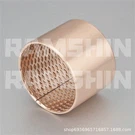
Bronze bushings are made from bronze alloys and are known for their durability and load - carrying capacity. They can withstand high pressures and heavy loads, making them suitable for industrial machinery, automotive applications, and construction equipment.
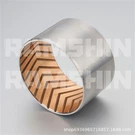
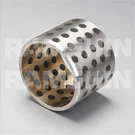
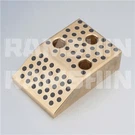
Graphite Plugged Bronze Bushings take the benefits of bronze bushings a step further. The graphite plugs embedded in the bronze provide additional lubrication. When the bushing is in use, the graphite is gradually released, reducing friction and preventing the bushing from seizing up. This type of bushing is often used in heavy - duty applications where reliability is crucial.
4. Flanged Bushings
Flanged bushings have a flange or lip at one end. This flange serves as a locating or retaining feature. It helps to keep the bushing in place and prevents it from moving axially. Flanged bushings are commonly used in applications where the bushing needs to be held securely in position, such as in automotive transmissions and hydraulic systems. They come in different materials, including steel, brass, and plastic, depending on the specific requirements of the application.
5. Split Bushings
Split bushings are designed to be split along their length. This makes them easy to install and remove, especially in situations where the shaft cannot be disassembled. They are often used in maintenance and repair work, as they can be quickly replaced without having to take apart the entire machinery. Split bushings can be made from various materials, such as bronze, steel, or plastic, depending on the load and operating conditions.
6. Tapered Bushings
Tapered bushings have a tapered inner diameter. They are used to mount pulleys, sprockets, and other rotating components onto shafts. The taper allows for a tight fit when the bushing is tightened onto the shaft. This ensures that the component is securely attached and can transmit torque effectively. Tapered bushings are commonly used in power transmission systems, such as in conveyor belts and industrial fans.
7. Plastic Bushings
Plastic bushings are lightweight, corrosion - resistant, and cost - effective. They are suitable for applications where weight is a concern or where the environment is corrosive. Plastic bushings can be made from different types of plastics, such as nylon, PTFE (Teflon), or acetal. Each type of plastic has its own unique properties. For example, PTFE has extremely low friction, making it ideal for applications where smooth movement is required.
Choosing the Right Guide Bushing
When it comes to choosing the right guide bushing for your application, there are several factors to consider. First, think about the load requirements. If you have a heavy - load application, you'll likely need a bushing made from a strong material like bronze or steel. For light - load applications, plastic bushings might be sufficient.
The operating environment is also crucial. If the application is in a high - temperature or dirty environment, self - lubricating bushings like graphite sleeve bearings or graphite plugged bronze bushings are a good choice. On the other hand, if the environment is clean and well - lubricated, ball guide bushings can provide high - precision motion.
Speed is another factor. High - speed applications require bushings with low friction, such as ball guide bushings. For slower - moving applications, sleeve bearings or bronze bushings might be more appropriate.
Lastly, consider the installation and maintenance requirements. If it's difficult to install or disassemble the machinery, split bushings can be a great solution. And if you want to minimize maintenance, self - lubricating bushings are the way to go.
Why Choose Our Guide Bushings
As a guide bushing supplier, we take pride in offering high - quality products. Our guide bushings are made from the best materials and are manufactured to strict quality standards. We have a wide range of guide bushings in stock, so we can meet your specific needs quickly. Whether you need a ball guide bushing for a high - precision application or a bronze bushing for a heavy - duty machine, we've got you covered.
We also provide excellent customer service. Our team of experts can help you choose the right guide bushing for your application and answer any questions you might have. We understand that every customer's needs are unique, and we're committed to providing customized solutions.


If you're in the market for guide bushings, I encourage you to reach out to us. We'd love to discuss your requirements and find the perfect guide bushing for your project. Let's work together to ensure your machinery runs smoothly and efficiently.
References
- Machinery's Handbook, 31st Edition
- Bearing Design and Application Handbook
- Industrial Guide Bushing Manufacturer's Catalogs