

Okay, as a radial bearings supplier, I'm super excited to chat about the main types of radial bearings. Radial bearings are essential in a ton of machines and equipment, working hard to support radial loads and keep things running smoothly. So, let's dive right in and explore the different types.
Deep Groove Ball Bearings
Deep groove ball bearings are probably one of the most common types out there. They're like the workhorses of the bearing world. The design of deep groove ball bearings features deep, raceway grooves that can handle both radial and axial loads in limited directions. They're super versatile and can be found in all sorts of applications, from electric motors to skateboards.
One of the great things about deep groove ball bearings is their efficiency. They have low friction, which means less energy is wasted as heat. This not only helps the equipment run more smoothly but also extends its lifespan. And because they're so common, they're relatively affordable and easy to find. If you're looking for a reliable and cost - effective option for general - purpose applications, Radial Bearings like deep groove ball bearings are a great choice.


Angular Contact Ball Bearings
Angular contact ball bearings are designed to handle both radial and axial loads at the same time. The contact angle between the balls and the raceways is what gives them this unique ability. This type of bearing is often used in applications where there are high - speed rotations and significant axial loads, such as in machine tool spindles and automotive transmissions.
The contact angle can vary, and different angles are suitable for different applications. A larger contact angle can handle more axial load but may have a slightly higher friction coefficient. Angular contact ball bearings usually need to be installed in pairs or sets to balance the axial loads. They offer high precision and excellent performance in high - speed and high - load scenarios.
Cylindrical Roller Bearings
Cylindrical roller bearings use cylindrical rollers instead of balls to support the load. This design allows them to handle large radial loads very effectively. The rollers are typically longer than the diameter, which provides a larger contact area with the raceways, distributing the load evenly.
There are different types of cylindrical roller bearings, including single - row, double - row, and multi - row designs. Single - row cylindrical roller bearings are simple and cost - effective, while double - row and multi - row bearings can handle even higher loads. They're commonly used in heavy - duty applications such as in steel mills, paper mills, and large - scale machinery. However, they're not very good at handling axial loads, so in applications where there are also axial forces, additional thrust bearings may be required.
Spherical Roller Bearings
Spherical roller bearings are designed to accommodate misalignment and heavy radial and axial loads. The outer raceway of a spherical roller bearing is spherical in shape, which allows the inner ring and the rollers to tilt relative to the outer ring. This makes them very suitable for applications where shaft deflection or misalignment is likely to occur, such as in conveyor systems and mining equipment.
These bearings can handle high - load capacities and are quite robust. They can operate under harsh conditions, including high temperatures and contaminated environments. But they're a bit more complex and expensive compared to some other types of bearings.
Needle Roller Bearings
Needle roller bearings use long, thin rollers (needles) with a small diameter - to - length ratio. This design allows them to fit into tight spaces while still being able to support relatively high radial loads. They're often used in applications where space is limited, such as in automotive transmissions and engines.
Needle roller bearings can come in a variety of designs, including full - complement (with no cage) and caged types. The full - complement needle roller bearings can handle higher loads but may have a lower maximum speed. On the other hand, caged needle roller bearings can operate at higher speeds but have a slightly lower load - carrying capacity.
Tapered Roller Bearings
Tapered roller bearings are designed to handle both large radial and axial loads. The rollers and raceways are tapered, which allows the load to be distributed more evenly across the contact surface. They're commonly used in automotive wheel hubs, where they need to support the weight of the vehicle (radial load) and the forces generated during acceleration, braking, and cornering (axial load).
Tapered roller bearings are usually installed in pairs to ensure proper load distribution and alignment. The adjustment of the pre - load is crucial for their performance. If the pre - load is too tight, it can cause excessive heat and wear; if it's too loose, the bearing may not function correctly.
Wrap - Up and Connecting with Customers
We've covered a bunch of different types of Radial Bearings, from the ever - popular deep groove ball bearings to the heavy - duty spherical roller bearings. Each type has its own unique features and advantages, making them suitable for different applications.
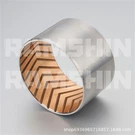
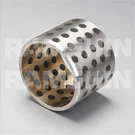
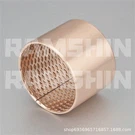
If you're in the market for high - quality radial bearings, whether it's a Bronze Rolled Cloth Hole Bearing or a Plain Bushing, we're here to help. We have a wide range of products to meet your specific needs. Our team of experts can provide you with professional advice and guidance to ensure you get the right bearings for your application.
Contacting us for a purchase discussion is simple. We're eager to answer all your questions, offer quotes, and discuss any custom requirements you may have. Whether you're working on a small DIY project or a large - scale industrial application, we can provide the solutions you need. Don't hesitate to reach out and start the conversation!
References
- Machinery's Handbook, 31st Edition. This comprehensive resource provides in - depth information on bearings, including design, performance, and application details.
- Bearing Engineering Handbook published by various bearing manufacturers. These handbooks offer practical insights into different types of bearings and their selection criteria.
- Technical documents from industry standards organizations such as ISO, DIN, and ANSI, which provide specifications and guidelines for bearing design and performance.