

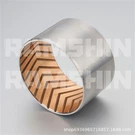
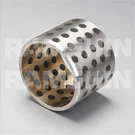
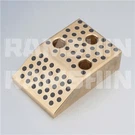
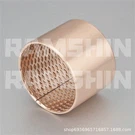
Hey there! As a supplier of Oilless Guide Plates, I often get asked about all sorts of technical stuff related to these products. One question that pops up quite a bit is, "What is the thermal expansion coefficient of an oilless guide plate?" Well, let's dig into this topic and break it down in a way that's easy to understand.
First off, let's talk about what an oilless guide plate is. An Oilless Guide Plate is a crucial component in many industrial applications. It's designed to provide smooth and reliable guidance without the need for additional lubrication. This makes it super convenient and cost - effective in the long run. These plates are used in various machinery, such as molds, automation equipment, and more.
Now, onto the thermal expansion coefficient. In simple terms, the thermal expansion coefficient is a measure of how much a material expands or contracts when its temperature changes. Every material has its own unique thermal expansion coefficient, and this value can have a big impact on how the material performs in different temperature environments.
For oilless guide plates, the thermal expansion coefficient is an important factor to consider. When the temperature rises, the guide plate will expand. If the expansion is not properly accounted for, it can lead to issues like misalignment, increased friction, and even damage to the equipment. On the other hand, when the temperature drops, the plate will contract, and again, this can cause problems if not managed correctly.
The thermal expansion coefficient of an oilless guide plate depends on the material it's made of. Common materials for oilless guide plates include different types of plastics, composites, and metals. For example, if the guide plate is made of a high - performance plastic, it may have a relatively high thermal expansion coefficient compared to a metal guide plate. This means that the plastic guide plate will expand and contract more significantly with temperature changes.
Let's take a closer look at some of the materials used in oilless guide plates and their typical thermal expansion coefficients.
1. Plastic - based Oilless Guide Plates
Plastics are often used in oilless guide plates because they are lightweight, corrosion - resistant, and have good self - lubricating properties. However, they also tend to have higher thermal expansion coefficients. For instance, a common plastic used in these applications is PTFE (Polytetrafluoroethylene). PTFE has a thermal expansion coefficient in the range of about 100 - 200 x 10⁻⁶ /°C. This means that for every degree Celsius increase in temperature, a PTFE oilless guide plate will expand by about 100 - 200 millionths of its original length.
2. Metal - based Oilless Guide Plates
Metals are another popular choice for oilless guide plates. Metals generally have lower thermal expansion coefficients compared to plastics, which makes them more stable in temperature - changing environments. For example, stainless steel, which is often used in high - precision applications, has a thermal expansion coefficient of around 10 - 17 x 10⁻⁶ /°C. This is significantly lower than that of PTFE, indicating that stainless steel guide plates will expand and contract much less with temperature changes.
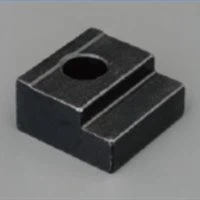
Another metal option is HT 250 Casting Iron Steel Wear Plate. Cast iron has a thermal expansion coefficient in the range of about 9 - 12 x 10⁻⁶ /°C. This relatively low value makes it a suitable material for oilless guide plates in applications where temperature stability is crucial.

Why Does the Thermal Expansion Coefficient Matter?
Understanding the thermal expansion coefficient of an oilless guide plate is essential for proper design and installation. When designing a machine or equipment that uses oilless guide plates, engineers need to take into account the expected temperature range and how the guide plates will expand or contract within that range.
For example, if a machine operates in a high - temperature environment, using a guide plate with a high thermal expansion coefficient may lead to dimensional changes that can affect the performance of the machine. In such cases, a material with a lower thermal expansion coefficient, like stainless steel or cast iron, would be a better choice.
On the other hand, in some applications where weight is a major concern and the temperature range is relatively stable, a plastic - based oilless guide plate may be more suitable despite its higher thermal expansion coefficient.
Compensating for Thermal Expansion
In many cases, it's possible to compensate for the thermal expansion of oilless guide plates. One common method is to use flexible mounting systems. These systems allow the guide plate to expand and contract freely without causing stress on the surrounding components.
Another approach is to design the machine with enough clearance to accommodate the expected expansion. This requires accurate calculations based on the thermal expansion coefficient of the guide plate material and the expected temperature range.
Related Products
If you're working with oilless guide plates, you may also be interested in Clamps for Guide Bushing. These clamps are used to secure the guide bushings in place, ensuring proper alignment and stability. They play an important role in the overall performance of the oilless guide plate system.
Conclusion
So, to sum it up, the thermal expansion coefficient of an oilless guide plate is a critical factor that can affect its performance in different temperature environments. By understanding the thermal expansion coefficients of different materials used in oilless guide plates, you can make more informed decisions when choosing the right guide plate for your application.
If you're in the market for high - quality oilless guide plates or have any questions about thermal expansion coefficients and how they relate to your specific needs, don't hesitate to reach out. We're here to help you find the best solutions for your industrial applications. Whether you need a plastic - based guide plate for a lightweight application or a metal - based one for high - temperature stability, we've got you covered. Let's start a conversation and see how we can work together to meet your requirements.
References
- Engineering Materials Handbook: Plastics, Composites, and Adhesives.
- Metals Handbook: Properties and Selection: Irons, Steels, and High - Performance Alloys.