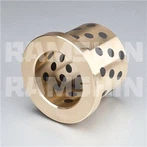
What is the Use of Guide Bush?
A guide bush, also known as a guide bushing, is a crucial mechanical component widely used in machining, automation, and precision engineering. It serves as a guiding element to ensure accurate movement, alignment, and stability in various mechanical processes.
Functions and Benefits of a Guide Bush:
1. Precision and Stability
A guide bush helps maintain precise alignment of moving parts, reducing deviations and ensuring smooth operation. This is particularly essential in CNC machines and Swiss-type lathes, where even the slightest misalignment can lead to defects.
2. Wear Reduction and Durability
By acting as a buffer between moving components, a guide bush reduces friction and wear, prolonging the lifespan of both the machine and its parts. This is especially beneficial in high-speed or repetitive motion applications.
3. Enhanced Machining Accuracy
In Swiss-type lathes, guide bushes play a key role in supporting long, slender workpieces, preventing deflection and ensuring high-precision cutting. This allows for the production of fine, intricate parts used in medical, automotive, and aerospace industries.
4. Improved Efficiency in Automated Systems
Guide bushes are commonly used in linear motion systems, robotic arms, and punch presses to enhance efficiency. Their ability to provide smooth and controlled movement helps reduce errors and increase productivity.
5. Versatility Across Industries
From metalworking and woodworking to plastic molding and textile manufacturing, guide bushes are indispensable in various industries, contributing to better quality and consistency in production.

A guide bush is a small but powerful component that ensures precision, durability, and efficiency in machining and automated systems. Whether in CNC machining, robotics, or industrial automation, its role in guiding and stabilizing motion makes it a vital part of modern manufacturing.