

Latest Products


Contact Us
- Building 3, No.81, Xinxing Road, Ganyao Town, Jiashan County, Zhejiang Province, China
- sales@ramshin.com
- +86-13484178032
What is Oilless Bronze Bushing
Oilless bronze bushing, or “sliding bearings,” are oil-free and wear-free products used to reduce friction in the system. Graphite with bronze is a material with a very low coefficient of friction that reduces wear on both the shaft and the body of the rod. Oilless Bushing Bearing Technology is a type of bearing technology that operates without the need for oil or lubrication. It is designed to reduce friction and wear, improve efficiency, and reduce maintenance requirements. The technology is commonly used in various industries, including industrial machinery, automotive, and consumer products, due to its advantages over traditional oil-based bearings.
Advantages of Oilless Bronze Bushing
Self-Lubrication
Unlike other bearing materials that require constant lubrication, oilless bronze bushings are self-lubricating. They contain small amounts of graphite or other lubricants that are released over time as the bushing wears down. This helps reduce friction and wear on the bearing and extends its service life.
High Strength and Durability
Bronze is a strong and resilient material that can withstand heavy loads and extreme temperatures. This makes bronze bushings ideal for demanding industrial applications that require long-lasting performance.
Low Fricition
Oilless bronze bushings have a low coefficient of friction, which means that they generate less heat and require less energy to operate. This helps improve efficiency and reduce energy costs.
Corrosion Resistance
Bronze is highly resistant to corrosion, making it an ideal choice for applications that involve exposure to harsh chemical environments or saltwater. This means that oilless bronze bushings are less likely to corrode or degrade over time, reducing maintenance costs and downtime.
Cost-Effective
Oilless bronze bushings are generally less expensive than other bearing materials, because of the simple manufacturing process, making them a cost-effective choice for many applications. They also offer low wear rates, reducing the need for frequent replacement or maintenance.
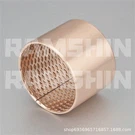
 SOB Self-lubricating Graphite Copper Sleeve
1. Material: bronze+graphite 2. Specification: Customized 3. Major markets: Europe, the United States, Southeast Asia, India, Russia, South Korea, etc. 4. Packaging specifications: Carton, wooden box
Add to Inquiry Self-lubricating Graphite Gasket
1. Material: bronze+graphite 2. Specification: Customized 3. Major markets: Europe, the United States, Southeast Asia, India, Russia, South Korea, etc. 4. Packaging specifications: Carton, wooden box
Add to Inquiry Self-Lube Standard Thrust Gasket
1. Material: bronze+graphite 2. Specification: Customized 3. Major markets: Europe, the United States, Southeast Asia, India, Russia, South Korea, etc. 4. Packaging specifications: Carton, wooden box
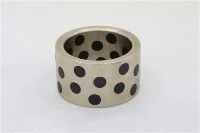
Add to Inquiry Graphite Bronze Bushing
1. Material: bronze+graphite 2. Specification: Customized 3. Major markets: Europe, the United States, Southeast Asia, India, Russia, South Korea, etc. 4. Packaging specifications: Carton, wooden box
Add to Inquiry Oilless Bearing
1. Material: bronze+graphite 2. Specification: Customized 3. Major markets: Europe, the United States, Southeast Asia, India, Russia, South Korea, etc. 4. Packaging specifications: Carton, wooden box
Add to Inquiry-
Standard Thrust Gasket
Definition Self-lubricating standard thrust gasket is a high performance solid lubrication product, usually in high force brass matrix, inlaid with a solid lubricant such as graphite or MoS2.
Add to Inquiry  Oilless Bronze Bearing
1. Material: bronze+graphite 2. Specification: Customized 3. Major markets: Europe, the United States, Southeast Asia, India, Russia, South Korea, etc. 4. Packaging specifications: Carton, wooden box
Add to Inquiry Self-lubricating Spherical Plain Bearing
1. Material: Collier brass2. Specification: Customized3. Major markets: Europe, the United States, Southeast Asia, India, Russia, South Korea, etc.4. Packaging specifications: Carton, wooden box5.
Add to Inquiry Oilless Bushing Bearing
Definition Self-lubricating copper sleeves, also known as graphite copper sleeves, self-lubricating wear-resistant sleeves, self-lubricating bearings, self-lubricating shaft sleeves or
Add to Inquiry-
Self-Lubricating Thrust Washers
Core advantage Maintenance-free design: PTFE/ graphite composite layer provides continuous lubrication and eliminates frequent oiling Ultra-high wear resistance: The special sintering process reduces
Add to Inquiry  KSOB650-W Copper Alloy Water-lubricating Bearing
KSOB650-W copper alloy water-lubricating bearing Structure: Aluminum brass base-- embedded with modified PTFE(SL4) Feature 1.Good anti-friction and wear-resistant effect with PTFE as lubricant,
Add to Inquiry KSOB650-B Copper Steel-casting Solid-lubricant Embedded B...
Structure: Low carbon steel base – casting bronze embedded with graphite and MoS2 (1-2mm) Feature 1.Save material cost 2.With low-carbon steel base, the product has better impact resistance comparing
Add to Inquiry
Why Choose Us
Our Product
Oilless bearing, Oilless bushing, Sliding bearing, DU bushing, Dx bushing, Bronze bushing, Brass bushing, Self-lubricating bearing, Composition bearing, Composition bushing, Brass bearing, Brass bushing, Plain bearing, Shaft bearing, Bearing bush, Aluminum bronze, Oilless wear plate, Cam stroken plate, Plastic plain bearing, Plastic bearing bushing.
Product Application
Automobile stamping die, automobile transmission parts, brake system, truck boggie axle, construction machinery, construction machinery, agricultural machinery, fluid transmission, wind power generation, photovoltaic power generation, iron and steel metallurgy, industrial automation, food machinery, office equipment and so on.
Production Market
Up to now, Our products have been exported to more than 40 countries, such as Russia, Australia, USA, UK, Germany, Ukraine, Iran, Romania, Hungary, Mexico, Brazil, Chile, so we can provide high service to our clients.
After sales service
Quality confirmed in one month, if point any quality in one month, we will bear the lost the quality problems.
How Does Oilless Bronze Bushing Work
Oilless bronze bushings are a specially designed type of bronze sliding bearing that incorporates maintenance-free solid lubricants like graphite and polytetrafluoroethylene (PTFE). This integration significantly enhances their performance and resistance in dry and high-temperature environments. These bushings excel in extreme working conditions, including oil-free, high-temperature, high-load, low-speed, contamination-resistant, corrosion-resistant, and radiation-resistant environments, and can even operate stably underwater and in vacuum conditions.
Crafted from high-strength copper alloys, these oilless bushings achieve excellent self-lubricating performance by incorporating graphite and PTFE into the bronze material. This combination not only reduces the friction coefficient but also greatly reduces wear between the shaft and the body. The design of oilless bushings ensures consistent performance across different temperatures, loads, movements, and environmental conditions, making them particularly suitable for high-load, low-speed applications.
Compared to traditional lubrication methods, oilless bushings offer significant advantages in handling friction interfaces. In traditional non-lubricated surface contacts, friction and wear are typically caused by phenomena such as shear, stick-slip, and plastic deformation. While traditional lubricants can mitigate these issues to some extent, they may be squeezed out under high contact area conditions, leading to phenomena like dry friction or boundary lubrication. Oilless bushings effectively avoid these problems through the continuous lubrication action of their self-lubricating materials, ensuring the reliability and stability of equipment under various working conditions.
Types of Oilless Bronze Bushings
Oilless bronze bushings are cylindrical metal bearings that are used in various industries to provide support and reduce friction betweenmoving parts. They are commonly made from a mixture of copper and tin, which gives them their characteristic bronze color andexcellent durability. Bronze bushings are known for their ability to withstand high temperatures and heavy loads, making them idealfor use in machinery and equipment that undergo frequent movement. There are several types of bronze bushings that are designedto meet specific needs and requirements in different applications.
One common type is the plain bronze bushing, which is a simple,solid cylinder with a smooth inner surface that provides a low-friction interface for moving parts.
Another type is the flanged bronzebushing, which has a flange at one end to provide extra support and stability in applications where axial movement is a concern.
Additionally, there are also self-lubricating bronze bushings that are impregnated with lubricating materials to reduce friction andmaintenance requirements. In addition to these types, there are also oil-impregnated bronze bushings that are designed to providecontinuous lubrication in high-speed and high-temperature applications. These bushings contain small pores that are filled withlubricating oil, which is released gradually as the bushing wears down.
This self-lubricating feature helps to extend the lifespan ofthe bushing and reduce the need for frequent maintenance. Overall, the different types of bronze bushings offer a range of optionsfor manufacturers and engineers to choose from based on their
Applications of Oilless Bronze Bushing
Industrial Machinery
Bronze bushings are critical for various manufacturing machinery. They are used in pivot points, rotating shafts, and other parts in presses, milling machines, and lathes. Bronze's ability to provide low-friction and reliable movement under heavy loads gives manufacturing processes the precision and efficiency they require.
Automotive
The automotive industry relies on bronze bushings in suspension components such as sway bars, control arms, and vehicle suspension systems. Bronze bushings deliver improved handling and smooth rides by offering resilience under heavy loads and dampening vibrations.
Aerospace
The aerospace industry uses bronze bushings in flight control systems, control surfaces, landing gear assemblies, and other aircraft components. Bronze bushings offer reliability to perform under the harsh conditions aircraft are subject to, including wide temperature fluctuations and high speeds.
Marine
The marine industry relies on bronze bushings for deck equipment, ship steering mechanisms, and propulsion systems. Because bronze can withstand heavy loads and resist corrosion in environments prone to saltwater exposure, it is ideal for marine applications.
Energy and Power Generation
Bronze bushings are used extensively in the energy and power generation sectors. Wind turbines use bronze bushings for gearbox assemblies, yaw mechanisms, and blade pitch systems. Bronze's wear resistance and durability help the bearings perform under challenging environmental conditions and continuous movement. Hydroelectric power plants also rely on bronze bushings to support critical components like turbine shafts for generating electricity from water.
Materials Used in Oilless Bronze Bushing

SAE 660 (also known as C93200 or SAE 660 Bearing Bronze)
This is a widely used bearing bronze alloy consisting of approximately 83% copper, 7- 10% tin, and small amounts of other elements like zinc, lead, and nickel. It offers good wear resistance and machinability and is suitable for various applications, especially in industrial and automotive equipment.

SAE 841 (C86300 or SAE 841 Oil-Impregnated Bronze)
This bronze alloy is designed explicitly for self-lubricating bushings. It contains approximately 84-87% copper, 8-12% tin, and around 3-5% other elements like iron and carbon. These bushings work well in applications where continuous lubrication is difficult to achieve.

Aluminum Bronze (C95400 and C95500)
These bronze alloys contain a higher percentage of aluminum, copper, and other elements. Aluminum bronze bushings offer excellent corrosion resistance and increased load-carrying capabilities, making them suitable for marine applications and heavy machinery.

Phosphor Bronze (C51000 and C54400)
Phosphor bronze bushings contain a small amount of phosphorus, which improves wear resistance and reduces friction. They are commonly used in applications that require resistance to corrosion and wear.

The two words - bushing and bearing - get thrown around a lot together. Sometimes they are even used interchangeably. But while they are very similar, they do have a slight difference. Let's take a look at why this confusion is so prevalent.
A bearing is a component piece that is decided to help two different parts move without too much friction between them. There are different designs for how this works, such as ball bearings, roller bearings, needle bearings, sleeve bearings, flange bearings, etc. Depending on what you are using the bearing for, you will choose the best design. A bushing is a type of bearing. They are also referred to as plain bearings or sleeve bearings. It moves in a sliding motion between two moving surfaces, also reducing friction.
The strength and durability of oilless bronze bushings, though not always visible on the surface, play a critical role in their applications. Design considerations for these components must be taken into consideration to ensure optimum performance. Utilizing advanced materials, such as PTFE or bronze-based alloys, can help increase the life expectancy of an oilless bushing while also reducing excessive wear from friction forces caused by oscillating motion. Additionally, effective design elements are required to optimize load capacities and reduce vibration transmissions that could otherwise cause structural damage over time.
Oilless bushings offer many advantages due to their unique construction. Their ability to lubricate themselves using hydrodynamic pressure allows them to operate with minimal maintenance requirements compared to traditional oiled bearings. Furthermore, they possess superior resistance against corrosion and high-temperature environments which makes them particularly suitable for operating conditions where harsh chemicals or extreme temperatures may exist. With this knowledge in mind, designers must consider how best to construct an oilless bushing system so that it meets application-specific requirements while still offering maximum reliability and efficiency.
Understanding the importance of selecting the right material combination is key when making design decisions regarding oilless bushings. The shape of the component plays a large role in how well it will perform within its intended environment; linear plain bearings require flatter surfaces than rotational designs due to differences in loading types between each type of bearing structure. By analyzing various factors like speed limits and environmental risks prior to constructing an assembly line utilizing oilless bushings, engineers can better identify what properties should be incorporated into the design for optimal performance results.
Oilless Bronze Bushing Technical Specifications
The manufacturing process is only one part of the equation when it comes to producing a product. The technical specifications are also essential in creating an efficient, cost-effective solution. Oilless bronze bushings are no exception. These components can offer numerous advantages over traditional lubricated bearing systems, and understanding their operation is key to making the best decision for any application.
Oilless bronze bushings typically consist of two main parts: a bronze alloy base material with embedded sintered metal particles such as copper or iron, and a graphite coating on top of that layer. This combination allows for increased friction reduction without relying on oil for lubrication purposes. Instead, this type of bushing works by utilizing self-lubricating properties created from the interaction between the two layers. As pressure is applied, the graphite coating compresses against the underlying metallic particles, causing them to form small pockets filled with pressurized air which acts as a cushioning agent and reduces wear due to friction. Additionally, these bushings provide superior vibration-dampening capabilities compared to other designs since they have higher heat dissipation rates.
Finally, oilless bronze bushings are relatively easy to install and maintain since there's no need for frequent lubrication changes like those required by conventional bearings. They're also highly durable and long-lasting; many manufacturers guarantee up to 10 million cycles before needing replacement—far more than what most standard bearings can offer. With all these benefits combined, it's easy to see why oilless bronze bushings are becoming increasingly popular in industrial applications around the world today.
Maintenance and Care of Oilless Bronze Bushings

Oilless bronze bushings are commonly used in a variety of industries for their durability and ability to withstand heavy loads. Thesecomponents are made of a combination of copper and tin, which gives them their characteristic bronze color.
Bronze bushings aredesigned to reduce friction and support mechanical parts, making them essential for machinery and equipment that requiresmooth and efficient movement. Maintenance and care of bronze bushings is crucial to ensure their longevity and optimalperformance.
One important aspect of maintenance is ensuring that the bushings are properly lubricated. This helps reduce frictionand wear on the bushings, extending their lifespan. Additionally, regular inspection of the bushings for signs of wear or damage isimportant to catch any issues early on and prevent more serious problems from occurring. Proper installation of bronze bushings isalso key to their maintenance. Ensuring that the bushings are installed correctly and securely will help prevent premature wear anddamage.
It is also important to follow the manufacturer's guidelines for maintenance and care, as they may provide specificrecommendations for lubrication, cleaning, and inspection. By taking these steps, users can ensure that their bronze bushingscontinue to perform effectively and efficiently.
FAQ
As one of the most professional oilless bronze bushing manufacturers and suppliers in China, we're featured by cheap products and good service. Please rest assured to wholesale good quality oilless bronze bushing from our factory. For custom service, contact us now.
