

What is the friction coefficient of a bronze bushing?
As a supplier of bronze bushings, I often encounter inquiries from customers regarding the friction coefficient of these essential components. Understanding the friction coefficient of a bronze bushing is crucial for various applications, as it directly impacts the performance, efficiency, and lifespan of machinery and equipment. In this blog post, I will delve into the concept of friction coefficient, explore the factors influencing it in bronze bushings, and discuss its significance in practical applications.


Understanding the Friction Coefficient
The friction coefficient is a dimensionless quantity that represents the ratio of the force of friction between two surfaces in contact to the normal force pressing the surfaces together. It is denoted by the Greek letter μ (mu). A lower friction coefficient indicates that less force is required to move one surface relative to the other, resulting in smoother operation and reduced energy consumption.
In the context of bronze bushings, the friction coefficient determines the amount of resistance encountered when the bushing slides against a shaft or other mating surface. This resistance can lead to wear, heat generation, and power loss, which can ultimately affect the performance and reliability of the equipment.
Factors Influencing the Friction Coefficient of Bronze Bushings
Several factors can influence the friction coefficient of bronze bushings, including:
- Material Composition: The type of bronze alloy used in the bushing plays a significant role in determining its friction coefficient. Different bronze alloys have varying chemical compositions and microstructures, which can affect their hardness, lubricity, and wear resistance. For example, bronze alloys containing lead or graphite additives tend to have lower friction coefficients due to their self-lubricating properties.
- Surface Finish: The surface finish of the bushing and the mating surface can also impact the friction coefficient. A smoother surface finish reduces the contact area between the two surfaces, resulting in lower friction. Conversely, a rough surface finish can increase friction and wear.
- Lubrication: Proper lubrication is essential for reducing the friction coefficient of bronze bushings. Lubricants such as oil or grease form a thin film between the bushing and the shaft, separating the two surfaces and reducing direct contact. This film helps to minimize wear, heat generation, and friction. The type and quality of the lubricant, as well as the lubrication method used, can all affect the effectiveness of lubrication.
- Load and Speed: The load applied to the bushing and the speed at which it operates can also influence the friction coefficient. Higher loads and speeds can increase the contact pressure between the bushing and the shaft, resulting in higher friction. Additionally, high speeds can cause the lubricant film to break down, leading to increased wear and friction.
- Temperature: Temperature can have a significant impact on the friction coefficient of bronze bushings. As the temperature increases, the viscosity of the lubricant decreases, which can reduce its effectiveness in reducing friction. Additionally, high temperatures can cause the bronze alloy to expand, which can increase the contact pressure between the bushing and the shaft and lead to increased friction and wear.
Significance of the Friction Coefficient in Practical Applications
The friction coefficient of bronze bushings is an important consideration in various practical applications, including:
- Automotive Industry: In automotive engines, bronze bushings are used in various components such as connecting rods, pistons, and camshafts. A low friction coefficient in these bushings helps to reduce power loss, improve fuel efficiency, and enhance engine performance.
- Industrial Machinery: In industrial machinery, bronze bushings are used in a wide range of applications, including conveyors, pumps, and compressors. A low friction coefficient in these bushings helps to reduce wear, extend the lifespan of the equipment, and improve overall efficiency.
- Aerospace Industry: In the aerospace industry, bronze bushings are used in critical components such as landing gear, control surfaces, and engine mounts. A low friction coefficient in these bushings is essential for ensuring smooth operation, reducing wear, and maintaining the reliability of the aircraft.
Our Bronze Bushing Products
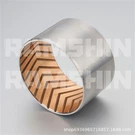
At our company, we offer a wide range of high-quality bronze bushings designed to meet the diverse needs of our customers. Our bronze bushings are made from premium-grade bronze alloys and are manufactured using advanced production techniques to ensure superior performance and reliability.
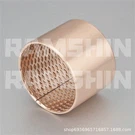
One of our popular products is the KSOB650-N Copper Bronze Bushing. This bushing is made from a high-strength copper bronze alloy and features a self-lubricating design, which helps to reduce friction and wear. It is suitable for a wide range of applications, including automotive, industrial, and aerospace.
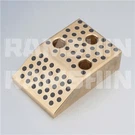
Another product in our portfolio is the Standard Thrust Gasket. This gasket is made from a bronze alloy and is designed to provide reliable thrust support in various applications. It has a low friction coefficient and excellent wear resistance, making it ideal for use in high-load and high-speed applications.
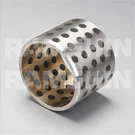
We also offer the KSOB650-H High-hardness Brass Solid-lubricant Embedded Bearing. This bearing is made from a high-hardness brass alloy and features embedded solid lubricants, which provide excellent lubrication and reduce friction. It is suitable for use in harsh environments and high-load applications.
Contact Us for Procurement and洽谈
If you are interested in our bronze bushing products or have any questions regarding the friction coefficient or other technical aspects, please do not hesitate to contact us. Our team of experts is always ready to assist you and provide you with the best solutions for your specific needs. We look forward to the opportunity to work with you and contribute to the success of your projects.
References
- "Friction and Wear of Materials" by M. A. Meyers and K. K. Chawla
- "Tribology: Friction, Wear, and Lubrication" by B. Bhushan
- "Handbook of Lubrication and Tribology, Volume I: Applications" edited by B. Bhushan