


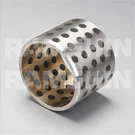

The load-carrying capacity of a plain bushing is a crucial factor in determining its performance and suitability for various applications. As a supplier of Plain Bushing, I have witnessed firsthand the importance of understanding this concept. In this blog post, I will delve into the intricacies of the load-carrying capacity of plain bushings, exploring the factors that influence it and how it impacts the overall functionality of these essential components.
Understanding Plain Bushings
Before we can discuss the load-carrying capacity, it's essential to understand what a plain bushing is. A plain bushing, also known as a sleeve bearing, is a simple cylindrical component that provides a sliding surface for a rotating or oscillating shaft. It is typically made of materials such as bronze, steel, or plastic, and is designed to reduce friction and wear between the shaft and the housing.
Plain bushings are widely used in various industries, including automotive, aerospace, industrial machinery, and marine applications. They are preferred in many cases due to their simplicity, cost-effectiveness, and ability to operate in harsh environments.
Factors Affecting Load-Carrying Capacity
The load-carrying capacity of a plain bushing is determined by several factors, each of which plays a significant role in its performance. These factors include:
Material Properties
The material used to manufacture the plain bushing has a profound impact on its load-carrying capacity. Different materials have varying levels of hardness, strength, and wear resistance, which directly affect their ability to withstand loads.
For example, Sn Bronze Bushing are known for their excellent load-carrying capacity and wear resistance. Bronze is a copper-based alloy that contains tin, which enhances its strength and hardness. This makes it suitable for applications where high loads and moderate speeds are involved.
On the other hand, plastic bushings are often used in applications where low friction and corrosion resistance are required. However, they generally have a lower load-carrying capacity compared to metal bushings.


Bushing Design
The design of the plain bushing also plays a crucial role in its load-carrying capacity. Factors such as the diameter, length, and wall thickness of the bushing can significantly affect its ability to distribute loads evenly.
A bushing with a larger diameter and length will generally have a higher load-carrying capacity compared to a smaller one. This is because a larger surface area allows for better load distribution, reducing the stress on the bushing and preventing premature wear.
The wall thickness of the bushing is also important. A thicker wall provides greater structural integrity and can withstand higher loads without deforming. However, it's essential to find the right balance, as an overly thick wall can increase the weight and cost of the bushing.
Lubrication
Lubrication is another critical factor that affects the load-carrying capacity of a plain bushing. Proper lubrication reduces friction and wear between the shaft and the bushing, allowing for smoother operation and increased load-carrying capacity.
There are several types of lubrication methods available, including oil lubrication, grease lubrication, and self-lubricating materials. Oil lubrication provides excellent lubrication properties and can handle high loads and speeds. Grease lubrication is more convenient and requires less maintenance, but it may not be suitable for high-speed applications.
Self-lubricating bushings, such as Bronze Wrapped Bearing, are designed to provide lubrication without the need for external lubricants. These bushings contain solid lubricants, such as graphite or PTFE, which are embedded in the material. This makes them ideal for applications where lubrication is difficult or impossible to maintain.
Operating Conditions
The operating conditions under which the plain bushing is used also have a significant impact on its load-carrying capacity. Factors such as temperature, speed, and the presence of contaminants can all affect the performance of the bushing.
High temperatures can cause the material of the bushing to expand, which can lead to increased friction and wear. Similarly, high speeds can generate more heat and increase the stress on the bushing, reducing its load-carrying capacity.
The presence of contaminants, such as dirt, dust, or moisture, can also cause premature wear and damage to the bushing. It's essential to ensure that the operating environment is clean and free from contaminants to maximize the load-carrying capacity of the bushing.
Calculating Load-Carrying Capacity
Calculating the load-carrying capacity of a plain bushing is a complex process that requires considering all of the factors mentioned above. There are several methods available for calculating the load-carrying capacity, including empirical formulas, analytical models, and finite element analysis.
Empirical formulas are based on experimental data and are often used for quick estimations. These formulas take into account factors such as the material properties, bushing dimensions, and operating conditions to provide an approximate load-carrying capacity.
Analytical models are more accurate and provide a detailed analysis of the stress distribution within the bushing. These models use mathematical equations to calculate the load-carrying capacity based on the material properties and the geometry of the bushing.
Finite element analysis (FEA) is a numerical method that uses computer simulations to analyze the behavior of the bushing under different loads. FEA can provide highly accurate results and can be used to optimize the design of the bushing for maximum load-carrying capacity.
Importance of Load-Carrying Capacity
Understanding the load-carrying capacity of a plain bushing is crucial for ensuring its proper selection and application. Using a bushing with a load-carrying capacity that is too low for the application can result in premature wear, failure, and costly downtime.
On the other hand, using a bushing with a load-carrying capacity that is too high can lead to unnecessary costs and a heavier design. It's essential to select a bushing that is specifically designed to meet the requirements of the application, taking into account factors such as the load, speed, and operating conditions.
Conclusion
In conclusion, the load-carrying capacity of a plain bushing is a complex concept that is influenced by several factors, including material properties, bushing design, lubrication, and operating conditions. Understanding these factors and their impact on the load-carrying capacity is crucial for selecting the right bushing for your application.
As a supplier of Plain Bushing, I am committed to providing high-quality products that meet the specific needs of our customers. Our team of experts can help you select the right bushing for your application, taking into account all of the factors mentioned above.
If you have any questions or need assistance in selecting the right plain bushing for your application, please don't hesitate to contact us. We look forward to working with you to find the best solution for your needs.
References
- "Mechanical Design Handbook," edited by Myer Kutz.
- "Bearing Design and Application Handbook," by Peter W. Musgrave.
- "Lubrication Fundamentals," by William G. Stachowiak and Andrew W. Batchelor.